
Connect with us

News

Ghana transport fares rise by 8% as new rates take effect

Published

on

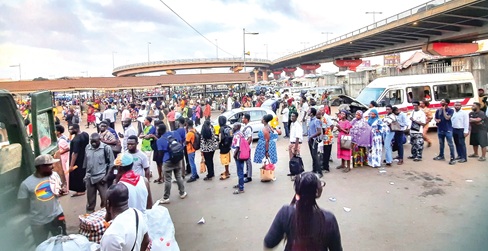
Commuters waiting for public transport in Ghana

Public transport fares in Ghana have increased by eight per cent, with the new rates taking effect from Saturday, September 26, 2026. The adjustment affects commercial road transport services and comes after consultations between the Ministry of Transport and transport operators over rising fuel, maintenance, spare-parts and other operating costs.

The Ghana Private Road Transport Union and the Ghana Road Transport Coordinating Council announced the adjustment after discussions held between September 8 and 22. The increase is the first official upward adjustment since fares were reduced by 15 per cent in May 2025.

The latest change is significant for commuters because public transport accounts for a large share of passenger movement in Ghana’s urban areas. Data cited by Graphic Online indicate that about 84 per cent of passenger trips in cities are made using public transport, while trotro services alone account for a substantial proportion of daily journeys.

The approved adjustment applies to several categories of commercial transport. These include intra-city trotro services, shared taxis, inter-city passenger services and haulage operations. The actual amount paid by a passenger therefore depends on the route and the fare that applied before the eight per cent adjustment.

Advertisement

For example, an intra-city fare of GH¢5 moves to GH¢5.50, while a GH¢10 fare becomes GH¢10.80. A GH¢15 fare rises to GH¢16.20, and a GH¢20 fare becomes GH¢21.60. For inter-city travel, a GH¢25 fare becomes GH¢27, a GH¢50 fare becomes GH¢54, and a GH¢100 fare becomes GH¢108.

Shared taxi fares have also been adjusted according to distance. The revised schedule provides for increases on journeys ranging from short intra-city trips to longer routes. Transport unions have instructed commercial operators to follow the approved rates and display the applicable fare schedules at loading terminals and stations.

The fare increase follows a period in which some operators had already been charging higher amounts on selected routes. Transport authorities and unions have said that unauthorised fare increases should not be confused with the officially approved adjustment. Operators are expected to comply with the published rates rather than independently setting prices.

Transport operators have pointed to rising operational expenses as a major factor behind the review. Fuel costs, vehicle maintenance, spare parts and other expenses have increased the cost of running commercial vehicles. The transport unions said these factors were considered during consultations with government and other stakeholders.

For commuters, however, the change has direct implications for household transportation budgets. A passenger who makes several daily journeys could see the cumulative impact of the increase over a month. Transport costs can also affect students, workers, traders and small businesses that depend on public transport for movement between residential areas, markets and workplaces.

Advertisement

The adjustment can also have wider economic effects because transport costs are linked to the movement of goods and services. Businesses that depend on commercial vehicles may face higher distribution expenses, while traders and consumers could experience changes in the cost of moving goods between production centres and markets.

The unions have also indicated that discussions with government will continue on broader challenges facing the road transport industry. These include vehicle financing, road conditions, fuel prices, regulation and the ability of operators to maintain their fleets.

As the new fares take effect, commuters are expected to rely on the official fare schedules at transport terminals and stations. Where passengers believe an operator is charging above the approved rate, they can seek clarification from the relevant transport union or regulatory authorities.

The latest adjustment therefore represents a new phase in Ghana’s public transport pricing framework. Its effect will be closely watched by commuters, transport operators, businesses and policymakers as they assess how the revised fares interact with household costs and the wider economy.

Source: Graphic Online, Ghana Private Road Transport Union and Ghana Road Transport Coordinating Council.

Advertisement

Click to comment

Leave a Reply

Your email address will not be published. Required fields are marked *

TOP HEADLINES