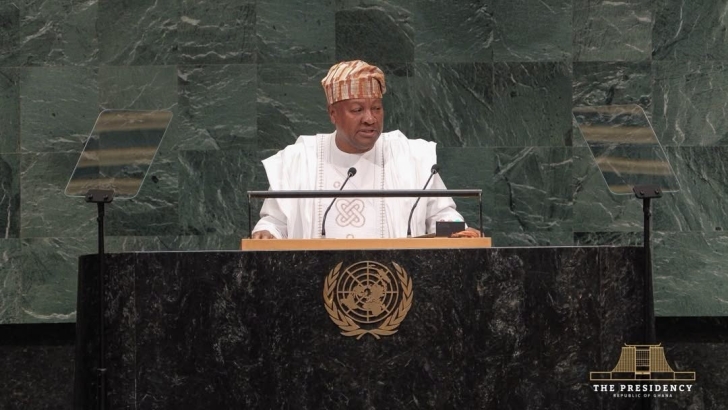
President John Dramani Mahama has called for a broader national discussion on how Ghana should approach the regulation of TikTok and other new media platforms, citing concerns about information integrity, anonymous online activity and the difficulty of balancing freedom of expression with harmful or misleading content.
President Mahama raised the issue during a town hall meeting with members of the Ghanaian community in New York on Friday, September 25, 2026. He said the rapid growth of digital platforms had changed the way information is created and distributed, creating questions that traditional media regulation was not designed to address.
The President said platforms such as TikTok allow individuals with mobile phones to publish information directly to large audiences. He noted that algorithmic systems can amplify content quickly, regardless of whether the material has gone through the editorial checks associated with traditional news organisations.
One of the issues he highlighted was information integrity. In traditional media, journalists and established media organisations have reputations and professional standards that influence how stories are produced and published. Social-media platforms operate differently because users can publish content without belonging to a formal media organisation.
President Mahama also discussed anonymous accounts and online content that may be insulting, misleading or otherwise harmful. At the same time, he said his comments were not about protecting himself from criticism. He stated that he did not object to being insulted and acknowledged that public officials are regularly subjected to criticism and commentary.
The President’s comments come amid wider discussion in Ghana about arrests and investigations connected to social-media activity. He said some cases reported in the media involved people allegedly being arrested over statements made online and indicated that he was concerned about situations in which individuals could be detained simply because they had insulted a public official.
Rather than proposing that government alone determine the rules, President Mahama suggested that professional and civil-society stakeholders should participate in a broader forum. He mentioned the Ghana Journalists Association and the Media Foundation for West Africa as organisations that could help bring stakeholders together.
The proposed discussion could examine questions such as where freedom of expression ends, when law-enforcement agencies should intervene, how harmful content should be addressed and what responsibilities should apply to platforms and users. These questions are part of a wider international debate as governments and technology companies respond to the rapid growth of social media.
For Ghana, the issue has implications for journalism, political communication, public debate, digital rights and online safety. TikTok and other platforms are increasingly used for news, entertainment, business promotion and political communication. Any changes in regulation could therefore affect a wide range of users and organisations.
A key challenge is finding a framework that addresses demonstrably harmful conduct without unnecessarily restricting legitimate criticism and public discussion. Any future policy process would need to define the conduct being regulated, the institutions responsible for enforcement and the legal safeguards available to people whose online activity becomes the subject of complaints.
The President indicated that recommendations from a stakeholder forum could be submitted to government to guide future decisions. That approach would place the issue within a broader consultation process rather than treating regulation as a matter for a single government institution.
There is currently no indication from the President’s comments that a specific new TikTok law or immediate blanket restriction has been announced. The discussion is instead focused on whether Ghana should develop a clearer framework for new-media regulation and how that framework should balance competing public interests.
As the conversation develops, digital-rights organisations, journalists, technology companies, civil-society groups, legal experts and ordinary users are likely to have an interest in the process. The final shape of any policy would depend on the outcome of consultation and any subsequent legislative or regulatory steps.
For Ghanaian social-media users, the immediate takeaway is that the government is considering a wider conversation about digital information and online conduct. Any confirmed policy changes should be assessed through official announcements and the applicable legal process.
Source: MyJoyOnline and President John Dramani Mahama’s September 25 town hall remarks.